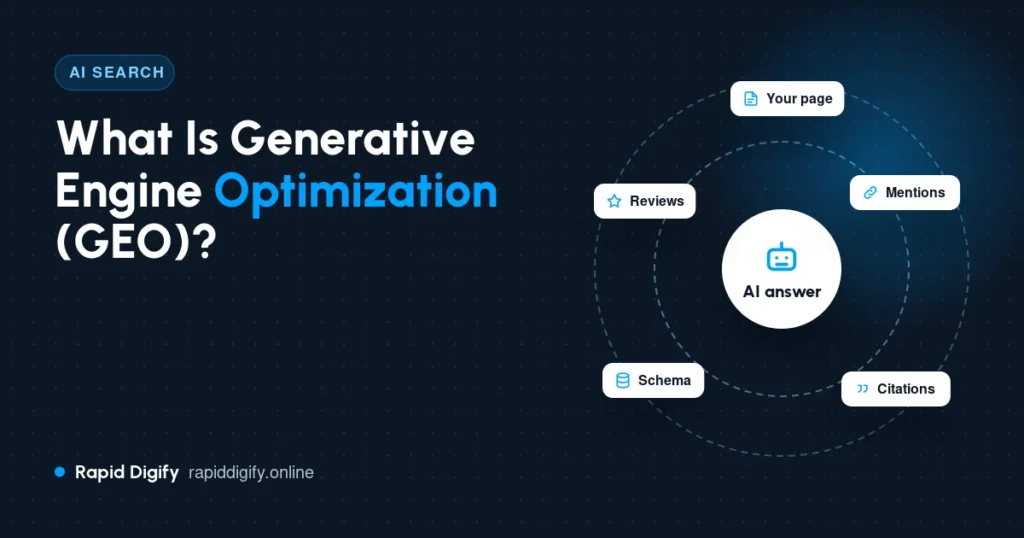
Generative engine optimization (GEO) is the practice of making your brand and content easy for AI tools like ChatGPT, Gemini, Perplexity and Google AI Overviews to find, understand and cite when they generate answers. Traditional SEO aims for a ranking position in a list of links. GEO aims for a mention inside the answer itself.
Where the term came from
The term was popularized by a 2023 research paper from Princeton University and partner institutions. The researchers tested ways of changing content to increase how often generative engines cited it. Adding statistics, quotations from credible sources and citations to references improved visibility noticeably, while classic keyword stuffing did little.
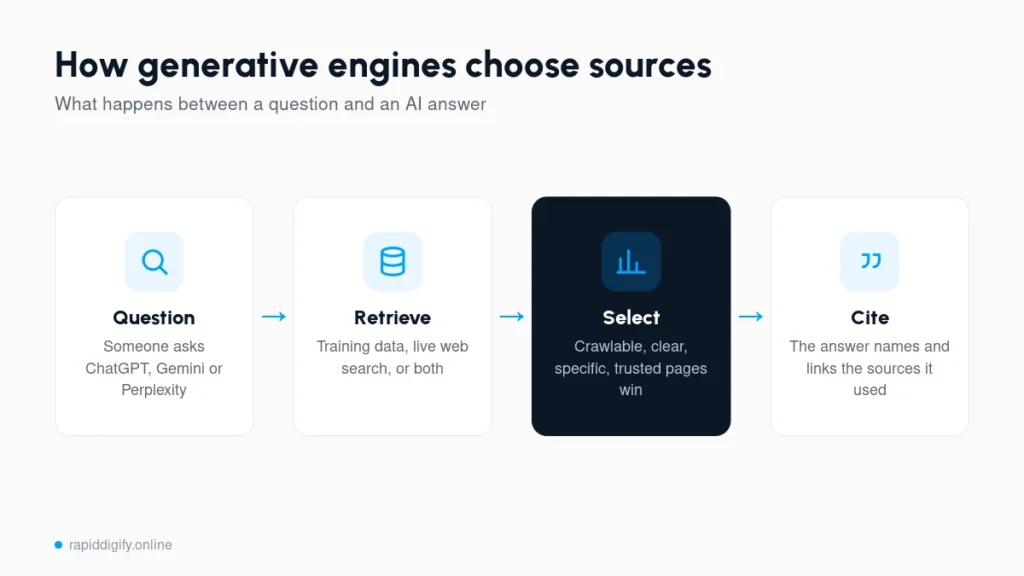
How generative engines choose sources
When you ask an AI tool a question, it either answers from what it learned in training, searches the web in real time, or does both. When it searches, it pulls a set of pages, reads them and writes an answer, often linking the pages it relied on. Pages that are easy to crawl, clearly structured, specific and trusted are more likely to be chosen.
The main GEO tactics
- Answer first. Put a clear 40 to 60 word answer right under each question heading.
- Be specific. Numbers, prices, dates, named examples and first-hand experience beat general statements.
- Cite and be citable. Reference credible sources and publish original data others want to quote.
- Structure the page. Descriptive headings, lists, tables and FAQs make content easy to extract.
- Clarify your entity. Use schema and keep your brand details consistent everywhere.
- Earn mentions. Reviews, roundups, directories and press coverage shape what models say about you.
- Allow AI crawlers. Don’t block GPTBot, OAI-SearchBot, PerplexityBot or Google-Extended unless you have a reason to.
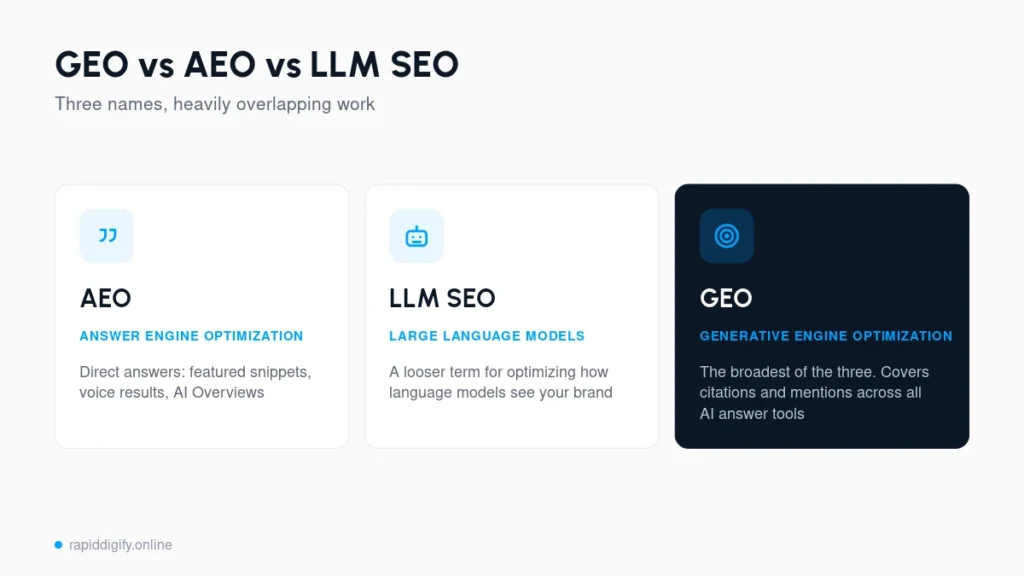
GEO vs AEO vs LLM SEO
You will see these terms used almost interchangeably. AEO (answer engine optimization) usually focuses on direct answers like featured snippets, voice results and AI Overviews. LLM SEO is a looser term for optimizing for large language models. GEO is the broadest of the three. In practice the work overlaps heavily.
Does GEO replace SEO?
No. AI tools often lean on pages that already rank well in regular search, and strong technical SEO, content and links remain the foundation. GEO adds a layer on top. Read our full comparison in SEO vs GEO.
Who should invest in GEO?
Any business whose customers research before buying: B2B services, software, healthcare, education, travel, finance and ecommerce. Local businesses benefit too, since AI assistants increasingly answer near me questions using review and listing data.
Want help? See our generative engine optimization services, or follow our step-by-step guide on how to rank in ChatGPT.
For local businesses, AI answers often pull from Google Maps data. Here is how to add your business to Google Maps properly.
Mentions and links from trusted sites feed AI answers too. See our link building services.
Want to know where your brand stands?
Request a free audit and I will check how Google and AI search tools see your business, then send the first fixes I would make.
Frequently Asked Questions
What does GEO stand for in marketing?
GEO stands for generative engine optimization, the practice of optimizing content and brand presence so AI tools like ChatGPT, Gemini and Perplexity cite it in their answers.
Is GEO the same as SEO?
No. SEO targets rankings in search results, while GEO targets mentions and citations inside AI-generated answers. They share the same foundations.
Who coined generative engine optimization?
The term was popularized by a 2023 research paper led by researchers at Princeton University.